A town’s name can seem permanent. It appears on maps, road signs, postmarks, courthouse records, business advertisements, and eventually in the memories of generations who cannot imagine the place being called anything else.
But Georgia’s map has been rewritten many times.
Some communities changed names because a railroad arrived. Others wanted to honor an influential businessman, advertise a mineral spring, celebrate a new college, or simply sound a little more prosperous. In at least one case, the United States mail helped push the issue.
Sometimes the story we repeat today—that one town simply “became” another—is not quite what happened because when you investigate a bit the stories behind Georgia’s changing town names offer a surprisingly revealing look at what communities believed would carry them into the future.
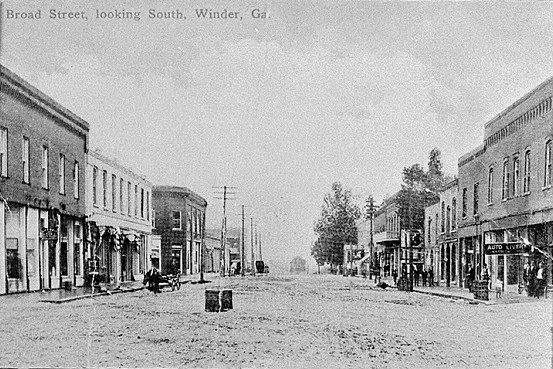
The name Jug Tavern was once associated with Winder, Georgia. Then the railroad intervened.
The New Georgia Encyclopedia notes that when the Seaboard Air Line Railroad arranged its route through the community, residents were so pleased that they renamed the town for John H. Winder (1862-1952), the railroad’s general manager. City of Winder historic-preservation material records that residents requested the change in 1892 and that the legislature approved it in 1893.
The choice tells us something about nineteenth-century Georgia. A railroad connection could determine whether a small town prospered, stagnated, or disappeared. Honoring the man associated with bringing the railroad to town was not merely flattery. It was recognition of an economic lifeline.
The old name never completely vanished, however. Modern Winder still has Jug Tavern Park—a reminder that discarded town names often survive long after official maps change.
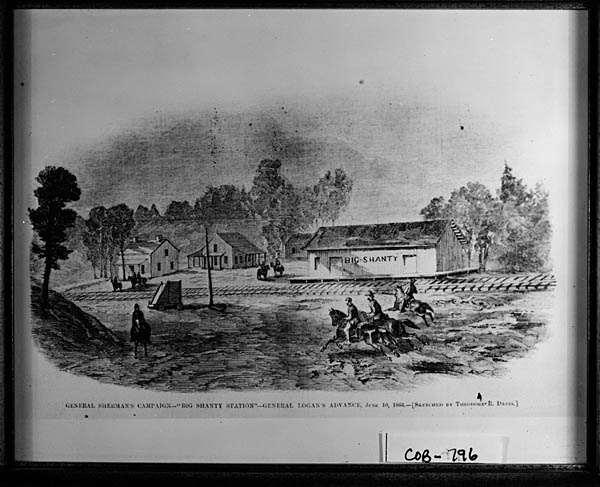
Kennesaw began with a name that was wonderfully descriptive but perhaps not particularly elegant.
“Big Shanty” grew from the temporary structures erected for workers building the Western and Atlantic Railroad. A Georgia Historical Society marker explains that railroad workers referred to the difficult grade in the area as the “big grade to the shanties,” eventually shortened to Big Shanty.
The old name became nationally famous during the Civil War. On April 12, 1862, Union raiders stole the locomotive General at Big Shanty, beginning what became known as the Great Locomotive Chase.
But a growing postwar community eventually wanted something more permanent-sounding than a construction-camp nickname.
The City of Kennesaw dates the town’s formal incorporation and change from Big Shanty to Kennesaw to 1887. Interestingly, the older Georgia historical marker says the name had begun changing to Kennesaw around 1870—another reminder that commonly used place names and legal municipal names do not always change on the same day.
Even so, Big Shanty has refused to disappear. The city still celebrates its heritage with the annual Big Shanty Festival.
Few Georgia name changes advertise civic ambition more clearly than Harmony Grove becoming Commerce.
By the turn of the twentieth century, Harmony Grove was an important cotton-trading community in Jackson County. The name may have sounded pleasant, but local boosters evidently thought it failed to describe what their bustling town had become.
There was another problem: mail.
Background history for the Harmony Grove Echo notes that residents wanted a name better reflecting the town’s place in the north Georgia cotton trade and were also dealing with mail being sent to another Harmony Grove in Dawson County.
The transition provides a wonderful example of how messy name changes could be.
A December 1903 report in the Griffin Weekly News and Sun stated that the U.S. Post Office had already accepted Commerce and that the local newspaper had become the Commerce News, while municipal business still had to be conducted under “Harmony Grove” until the Georgia legislature legalized the change.
The legislature followed. The Macon Telegraph reported in July 1904 that lawmakers had passed the bill changing Harmony Grove to Commerce, and Jackson County’s official history likewise places the change in 1904.
There is a source discrepancy worth mentioning. The present-day website for the city of Commerce gives 1909 as the official change. Contemporary evidence, however, strongly supports the postal transition in 1903 and legislative name change in 1904; a 1949 Jackson County newspaper history indicates that 1909 instead marked Commerce’s incorporation as a city.
In other words, Harmony Grove did not wake up one morning as Commerce. The post office, newspaper, townspeople, and legislature changed over a period of months.
And “Commerce” itself was practically an advertisement: This is no sleepy grove. Business is being done here.
Some communities turned not to railroads or prominent men but to the ground beneath their feet.
Powder Springs in Cobb County was incorporated as Springville in 1838. The Georgia General Assembly’s original act described it as “Springville, at the Powder Springs,” showing that the feature that eventually supplied the modern name was already well known.
According to the City of Powder Springs, seven mineral springs were found within the community. Minerals in the water darkened the surrounding sand until it resembled gunpowder. In 1859, Springville officially became Powder Springs.
The new name was not merely prettier or more fashionable. It distinguished the town by something visitors might come to see.
That same idea—turning natural resources into civic identity—appeared elsewhere in Georgia.
Douglas County provides an especially interesting example because the unofficial name began overtaking the legal one years before lawmakers caught up.
The community west of Atlanta was long known as Salt Springs. Douglas County records show that it had a post office by 1849 and was incorporated as the Town of Salt Springs in 1882.
The area’s mineral waters, however, increasingly became associated with the name Lithia Springs, particularly as a health resort developed around them.
Douglas County’s Lithia Springs Small Area Plan notes that by 1895 the community was already being identified as Lithia Springs and appeared under that name on an 1899 map. Yet the Georgia General Assembly did not formally amend the municipal name from Salt Springs to Lithia Springs until 1918.
That twenty-plus-year gap is fascinating.
The town’s identity changed in popular usage before its legal identity did.
In effect, visitors, businesses, maps, and the resort helped rename the place before the legislature made it official.
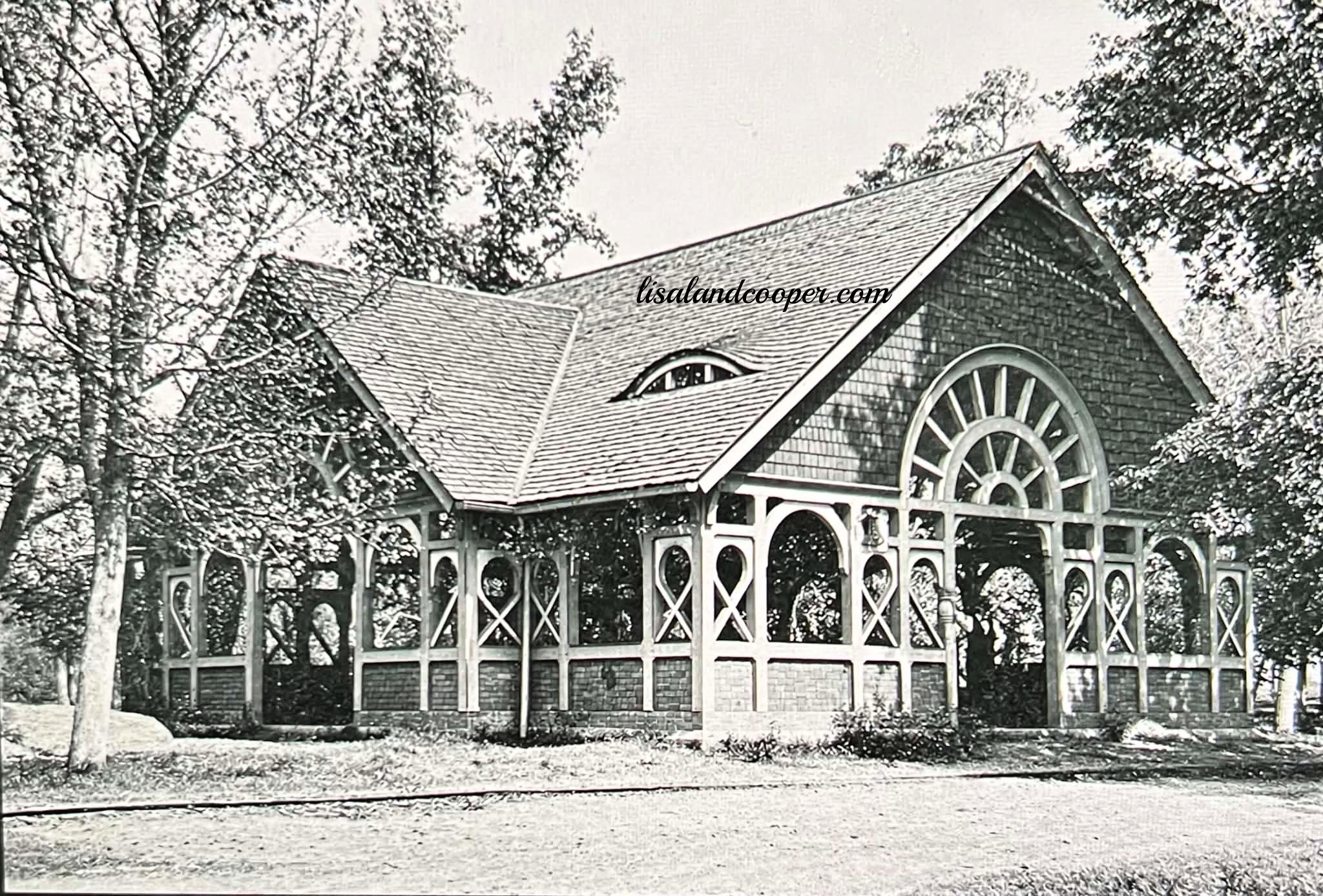
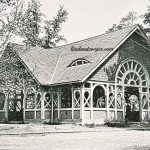
The picture below shows the structure that was placed over the original spring during the area’s heyday as a resort. Visitors and local residents alike referred to the structure as the marble pavilion due to the slab of marble that served as a floor.
South of Atlanta, the community we know as College Park once carried the considerably more English-sounding name Manchester.
Then the schools arrived.
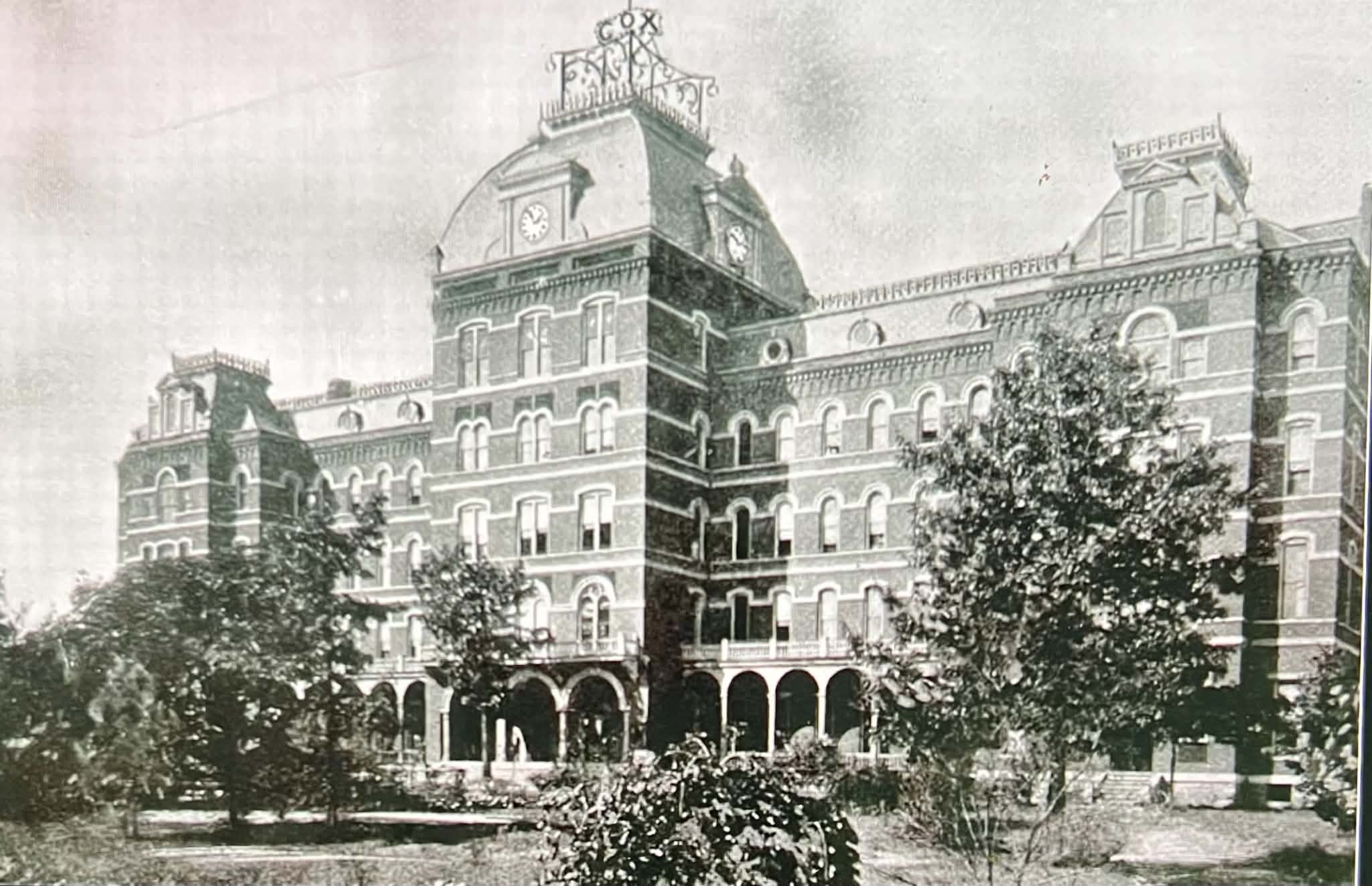
According to the City of College Park, the community changed its name in 1896 after the arrival of Cox College and in recognition of the educational institutions developing there, including the Georgia Military Academy, today known as Woodward Academy where I graduated high school in 1980. Cox College had relocated its principal institution from LaGrange to Manchester in 1895.
A Savannah newspaper was already reporting in February 1896, simply and matter-of-factly, that “the name of Manchester has been changed to College Park.”
It was civic branding before anyone used the term.
“Manchester” could have been almost anywhere. “College Park” told prospective residents what kind of community its boosters wanted people to imagine.
The name outlasted Cox College itself, which eventually closed for good in the 1930s.
Some Georgia names reveal just how much influence railroad engineers and executives once possessed.
The settlement that became Thomson was known by colorful early names including the Slashes, Hickory Level, and even Frog Pond, but railroad development transformed it.
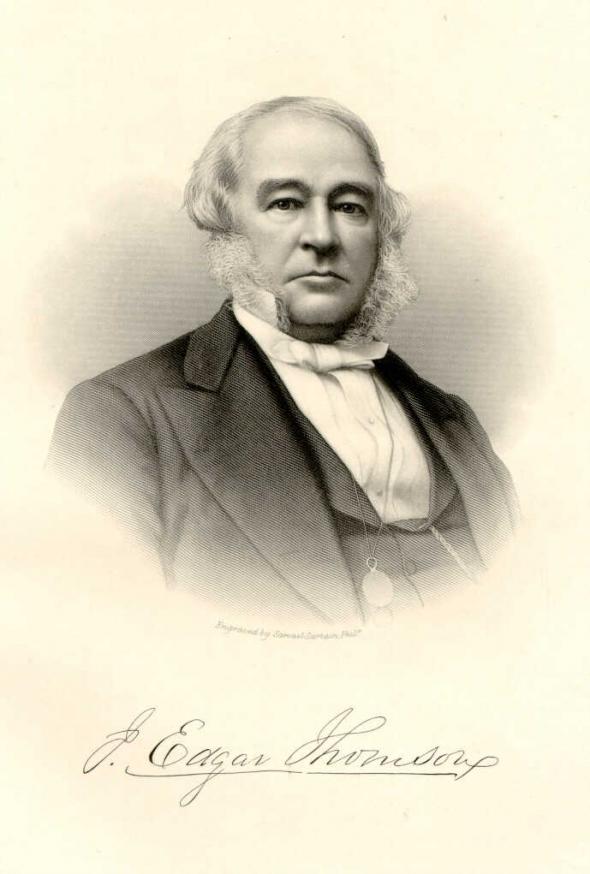
Historic-preservation documentation prepared for Thomson and McDuffie County notes that the settlement grew as a stop on the Georgia Railroad and was eventually named for John Edgar Thomson, the railroad’s chief civil engineer and surveyor. The town was incorporated as Thomson in 1854.
John Edgar Thomson later became president of the Pennsylvania Railroad, one of the most powerful transportation corporations in nineteenth-century America.
So, an east Georgia town ended up carrying the name of a Pennsylvania railroad titan because railroads did more than connect towns.
They created them.
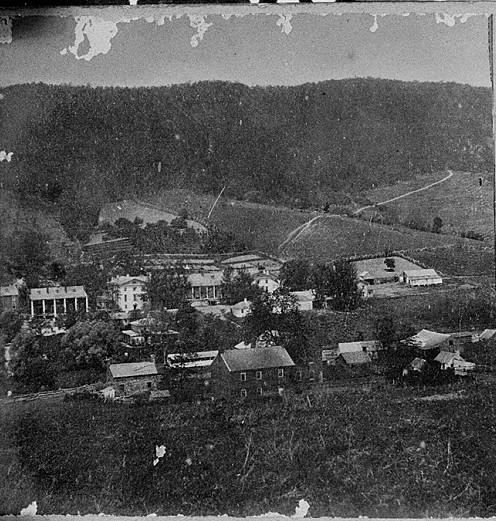
Warm Springs was originally incorporated as Bullochville. The New Georgia Encyclopedia states that the community adopted the name Warm Springs in 1924, reflecting the mineral springs that had long attracted visitors to the area. That was also the year Franklin D. Roosevelt first traveled there seeking relief and exercise for his paralyzed legs.
Modern retellings sometimes say that Roosevelt simply “renamed the town.”
He certainly played an important role, but the reality was more democratic.
A retrospective account published in the Walker County Messenger in 1956 reported that Bullochville and the village associated with the springs were joined as Warm Springs after a vote of local residents at a community meeting where Roosevelt spoke.
Roosevelt therefore helped champion the identity, but he did not possess some presidential-looking power to rename a Georgia municipality on his own—especially since he was not yet president.
The new name also made perfect economic sense. Visitors from around the country would eventually know the community because of its springs and Roosevelt’s rehabilitation work, not because of the Bulloch family for whom Bullochville had been named.
Sometimes the best name is the one outsiders already associate with the place.
Waycross demonstrates why historians should be careful with the word “renamed.”
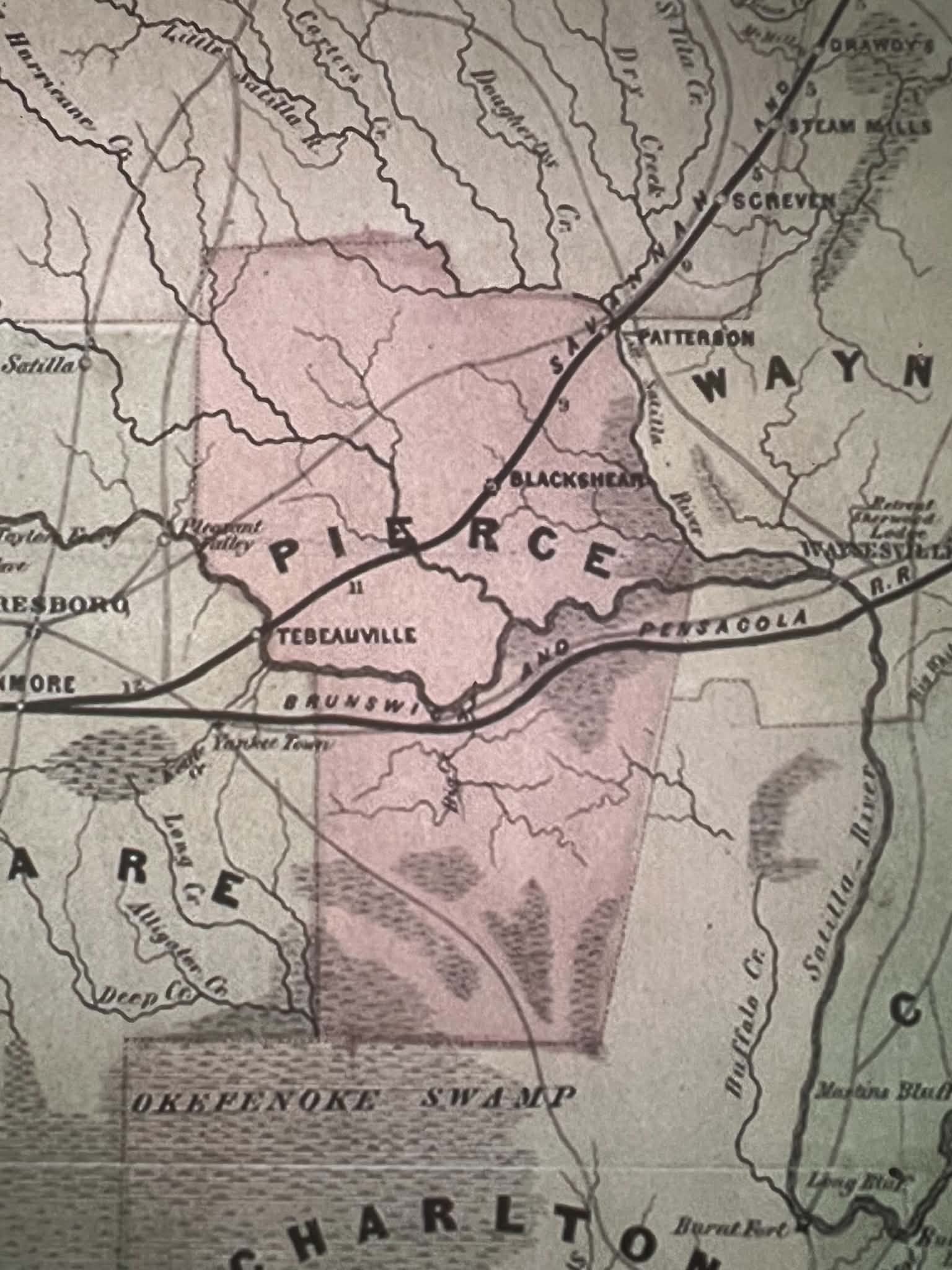
The City of Waycross describes an earlier settlement called Tebeauville that developed around a railroad station in the 1850s, but its own history notes that Tebeauville was eventually absorbed into the growing city of Waycross.
The New Georgia Encyclopedia describes the area as having been known as Old Nine or Number Nine after a railroad-station number and states that local leaders chose Waycross in 1874 because roads and transportation routes crossed there.
Other local records preserve additional names, including Pendleton.
So, saying simply that “Tebeauville changed its name to Waycross” hides a more complicated story of adjoining settlements, railroad junctions, shifting population, and municipal organization.
The name Waycross nevertheless captured the reason the new town prospered.
The ways crossed there.
Few Georgia town names have ever provided a better two-word explanation of geography and destiny.
Atlanta provides perhaps Georgia’s most famous example for a name change, although its naming history deserves one correction. According to the Georgia Historical Society’s marker “Thrasherville: Where Atlanta Began,” both Thrasherville and Terminus were unofficial names for settlements that developed around construction of the Western and Atlantic Railroad. Marthasville, named for Martha Lumpkin, daughter of former Georgia governor Wilson Lumpkin, became the first incorporated town name in 1843. You can read more about Atlanta’s name changes in my recent article Atlanta, the city that Kept Renaming Itself here at this website.
Taken together, these stories reveal something larger than a collection of amusing old names.
Georgia communities renamed themselves when their sense of the future changed.
Winder thanked the railroad man who helped put the town on the route. Commerce discarded Harmony Grove for a name proclaiming economic ambition. College Park advertised education. Powder Springs, Lithia Springs, and Warm Springs turned natural attractions into municipal identities. Atlanta exchanged a family name for one suggesting its railroad destiny.
And places such as Kennesaw and Waycross remind us of that history rarely changes as neatly as a highway sign. Informal names could coexist with legal ones for years. Railroad stations, post offices, newspapers, residents, and legislatures did not necessarily make the switch simultaneously.
That may be the most interesting part of all.
Changing a town’s name was rarely just about what a community had been.
It was about what the people living there hoped it would become.


Leave a Reply