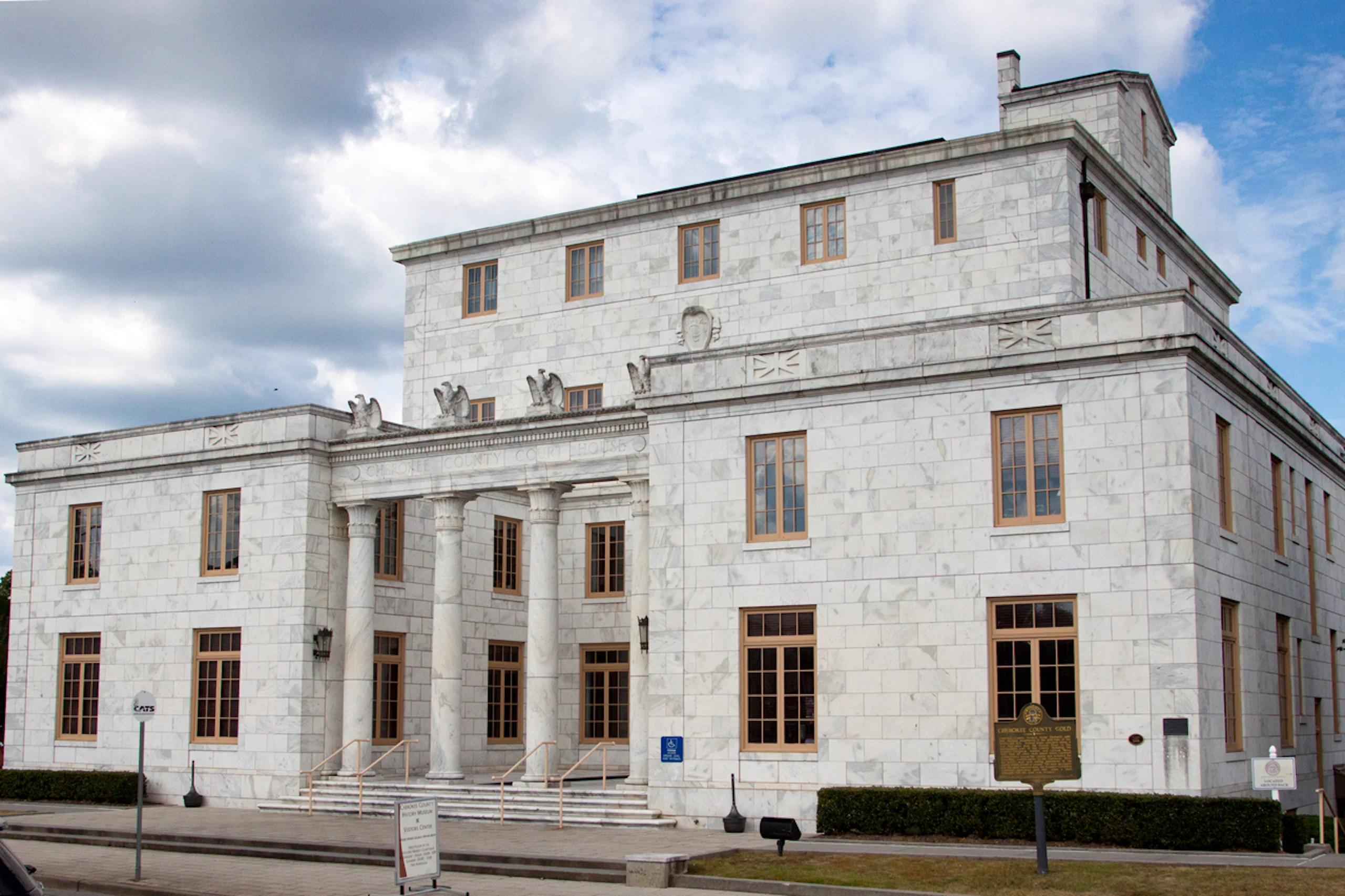
The first courthouse to truly catch my attention was the Cherokee County Courthouse in Canton, Georgia. Both of my parents were born in Canton, and we were often there visiting relatives. I did not know it at the time, but Canton itself had once been known as “Cherokee Court House” before becoming the county seat and eventually taking the name Canton. Years later, during my second year of college at Reinhardt, I found myself working inside that very courthouse in the Superior Court Clerk’s office. Suddenly, the building that had once seemed so large and mysterious to me as a child became a workplace — and the old record books, court filings, and daily courthouse routines became real in a completely different way.
It wasn’t only the buildings themselves, though they certainly made an impression — the height of the columns, the towers and clock faces, the broad steps, the old doors, the stonework, the brick, and the feeling that something important had always happened there. I was also fascinated by the life around them. Courthouse squares had a certain rhythm: people coming and going, lawyers with papers tucked under their arms, families waiting in hallways, clerks behind counters, and the steady movement of county business taking place inside walls that had witnessed generations of ordinary lives.
I have been drawn to county courthouses since I was a small child.
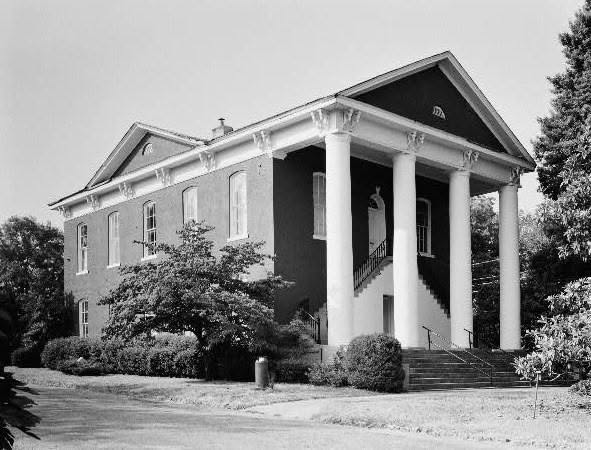
Another courthouse that fascinated me from childhood was no longer a courthouse at all by the time I knew it. The old Campbell County Courthouse in Fairburn stood just down the railroad tracks from my childhood home at Red Oak, and we often passed it when we were in Fairburn. Campbell County had dissolved in 1932 and become part of Fulton County, but the courthouse remained as a reminder of the county that had once been. Built in 1871, the old courthouse served Campbell County for more than sixty years. Through the decades it was used for other purposes, including serving as home of the Old Campbell County Historical Society, until the society was told it could no longer remain in the city-owned building.
I could not have known then that I would one day return to that old courthouse again and again to research Campbell and Douglas County history, or that stories connected to that building and its surrounding community would find their way into my Douglas County Sentinel history column and my books.
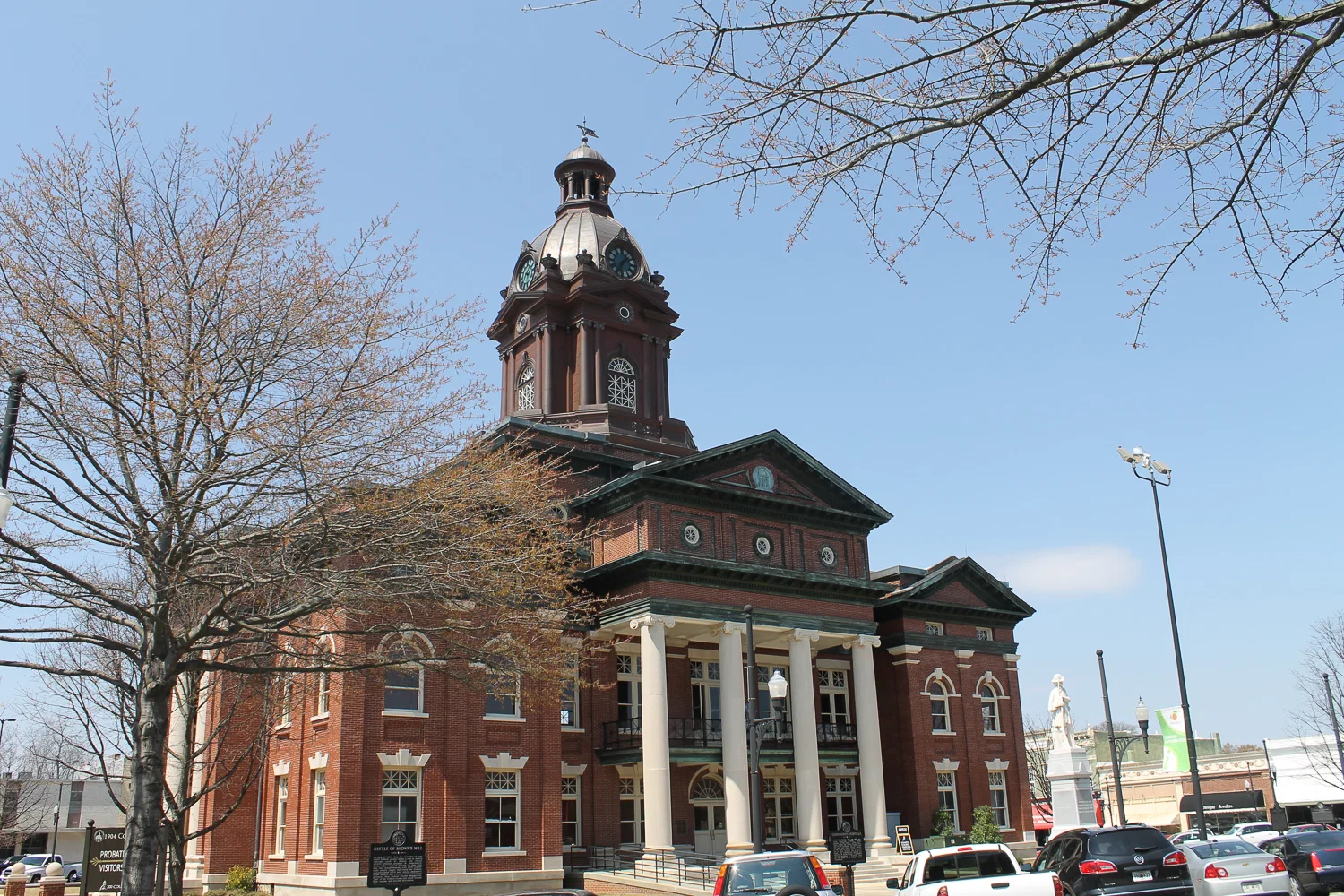
Then there was the Coweta County Courthouse in Newnan, another courthouse that always seemed to possess the dignity a courthouse should have. Built in 1904 and designed in the Neoclassical Revival style, it stands at the center of Newnan’s courthouse square with the kind of presence that makes you understand why these buildings became landmarks. It is not simply a place where county business was conducted. It is part of the identity of the community itself.
Over time, I came to realize that every Georgia courthouse has two histories.
One is the history people can see — the building on the square, the columns, the clock tower, the dome, the courtroom, the steps, and the memories attached to that place. The other history is tucked away inside — deeds, marriages, estates, court cases, tax records, guardianships, wills, and all the paper trails left behind by people who never imagined someone might come looking for them a century or more later.
For generations, it was the place where land changed hands, marriages were recorded, estates were settled, taxes were paid, criminal cases were heard, elections were certified, and families left paper trails without ever realizing they were doing so. If you are researching a Georgia family, sooner or later your path almost always leads to a courthouse — or to the place where one used to stand.
That is why Georgia’s courthouse history matters so much. When a courthouse burned, was rebuilt, abandoned, moved, modernized, or demolished, the loss was not only architectural. Sometimes the greater loss was found in the records — the names, transactions, disputes, marriages, estates, and quiet details of everyday life that helped tell the story of a county and its people.
Georgia’s courthouse story is especially rich because Georgia has so many counties. The state’s first constitution in 1777 created eight counties: Burke, Camden, Chatham, Effingham, Glynn, Liberty, Richmond, and Wilkes. Over time, that number grew to 159, the maximum allowed under Georgia’s 1983 Constitution. Only Texas has more counties. One old explanation says Georgia created so many counties so a farmer could travel by mule or buggy to the county seat, conduct business, and return home the same day.
That practical arrangement made the county courthouse one of the most important buildings in every community. But it also created a problem for future researchers: when the courthouse burned, flooded, was abandoned, demolished, or replaced, the records inside were sometimes damaged or lost.
And Georgia has had plenty of courthouse losses.
Before phones, computers, digital backups, or even dependable fireproof vaults, the courthouse held a county’s memory. Deeds, estate papers, marriage books, tax digests, court minutes, guardianships, bonds, and criminal cases were usually kept in the building where county business took place.
That is why courthouse fires are such a major issue in genealogy. A burned courthouse can mean missing deed books, lost marriage records, incomplete estate files, or court minutes that simply stop for a period of years. But the phrase “burned county” can also be misleading. It does not always mean every record was destroyed. Sometimes only one office burned. Sometimes bound books survived in vaults. Sometimes loose papers were lost but deed books remained. Sometimes records had already been copied, microfilmed, abstracted, or duplicated at the state level.
For Georgia researchers, the rule is simple: never assume everything is gone.
Georgia courthouse disasters happened for many reasons. Fire was the most common, but not the only one. Some records were damaged by floods, storms, war, arson, neglect, or hasty attempts to move them out of danger.
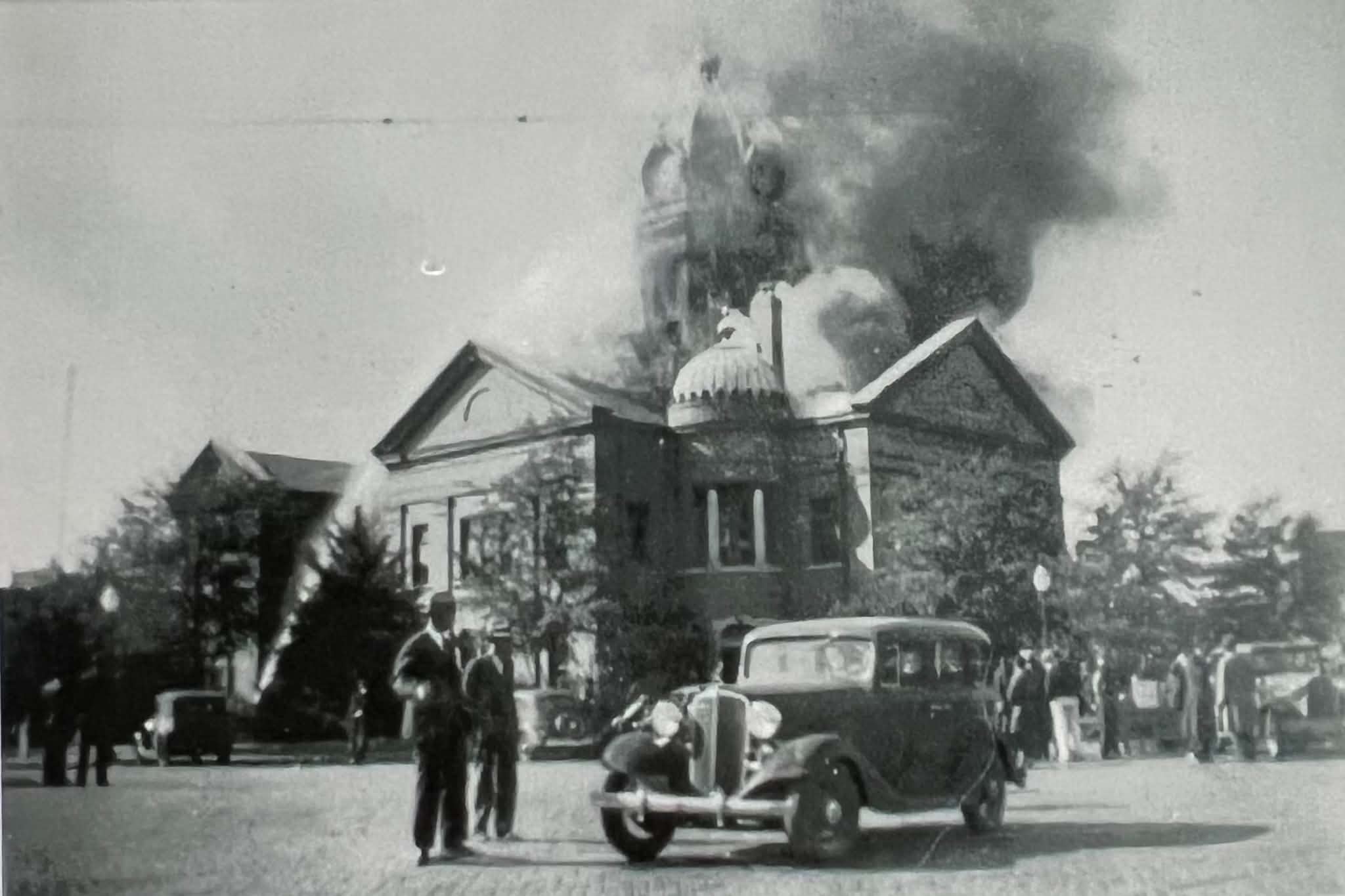
The Atlanta-area examples alone show how varied these losses could be. A Georgia Archives research handout notes that many Atlanta-area county records survive but lists several important exceptions: DeKalb County lost records in an 1842 courthouse fire; Gwinnett County’s courthouse was burned by the Ku Klux Klan in 1871; Cobb County’s civil archives were lost in 1864 in an attempt to save them from approaching Federal troops; and several Fulton County deed and mortgage books were reportedly destroyed after being thrown down the courthouse well around 1880.
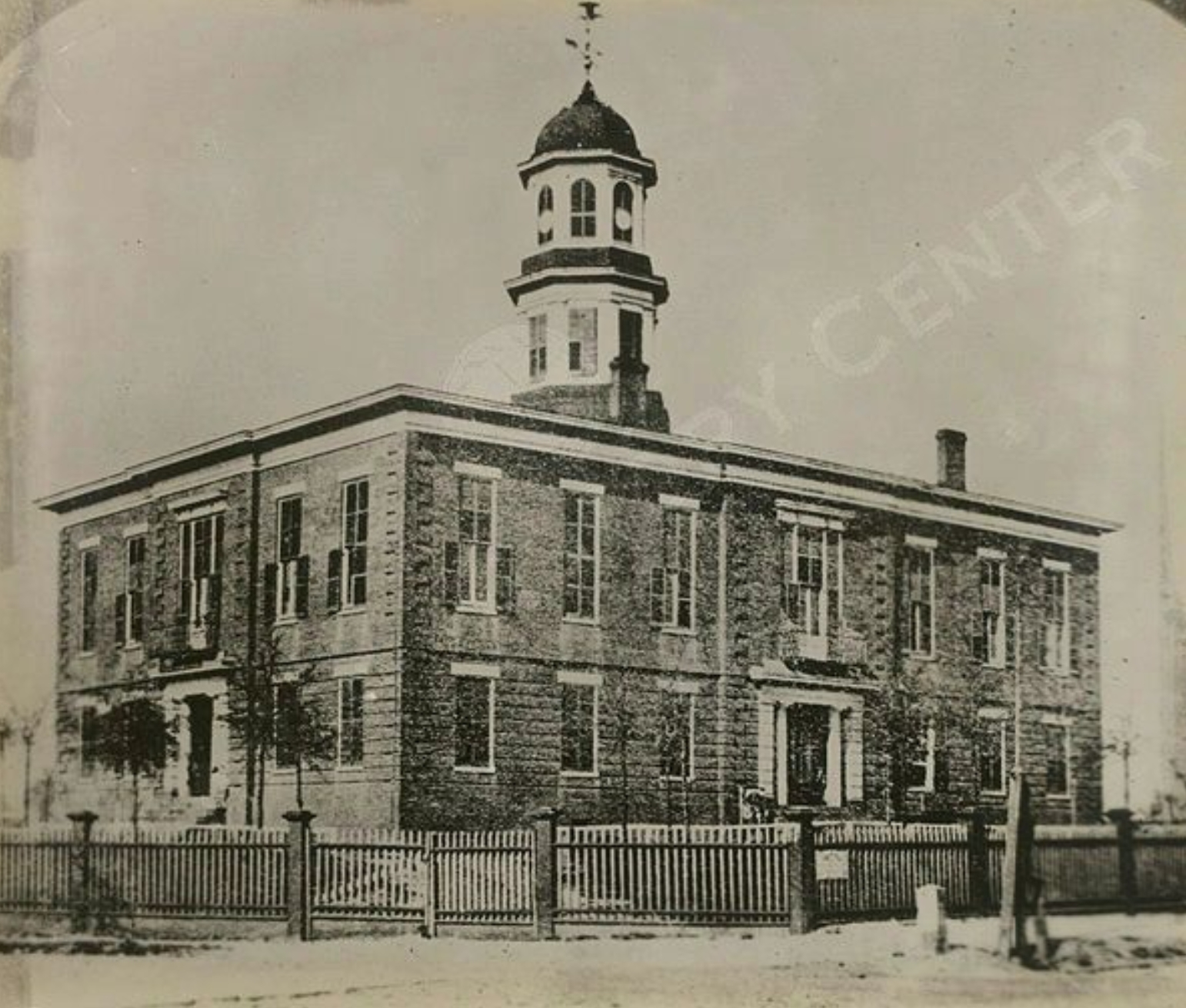
That last detail is the kind of courthouse story genealogists dread — not a grand fire sweeping through a town square, but an ordinary record disaster caused by panic, poor judgment, or bad storage.
The Civil War period was especially hard on county records in some parts of Georgia. Courthouses and public buildings became vulnerable as armies moved across the state. In other counties, the danger came later from local violence, aging buildings, or the simple reality that nineteenth-century towns were full of wooden structures, fireplaces, stoves, candles, and paper.
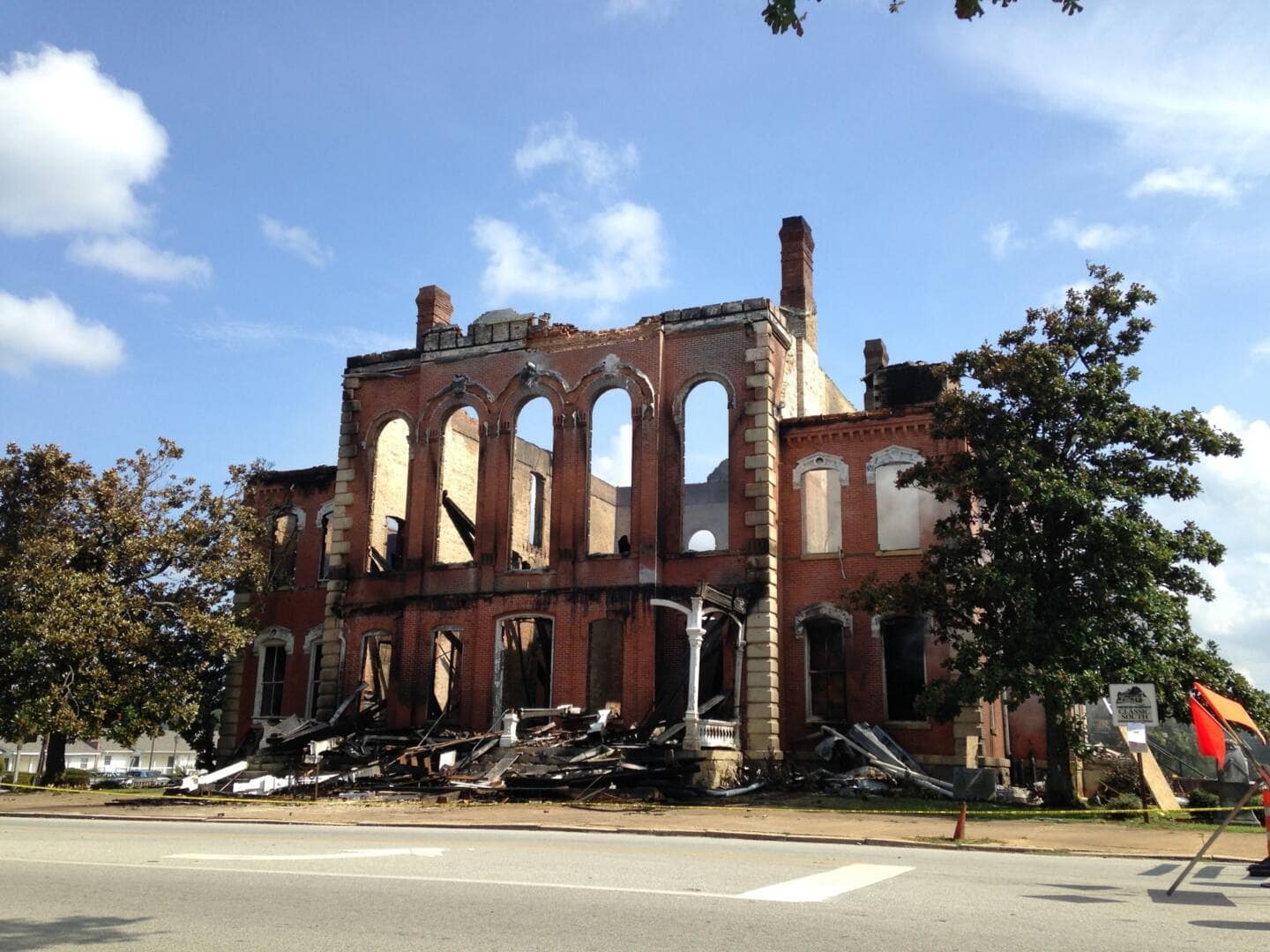
Courthouse disasters are not just nineteenth-century stories. On August 11, 2014, the historic Hancock County Courthouse in Sparta was destroyed by fire.
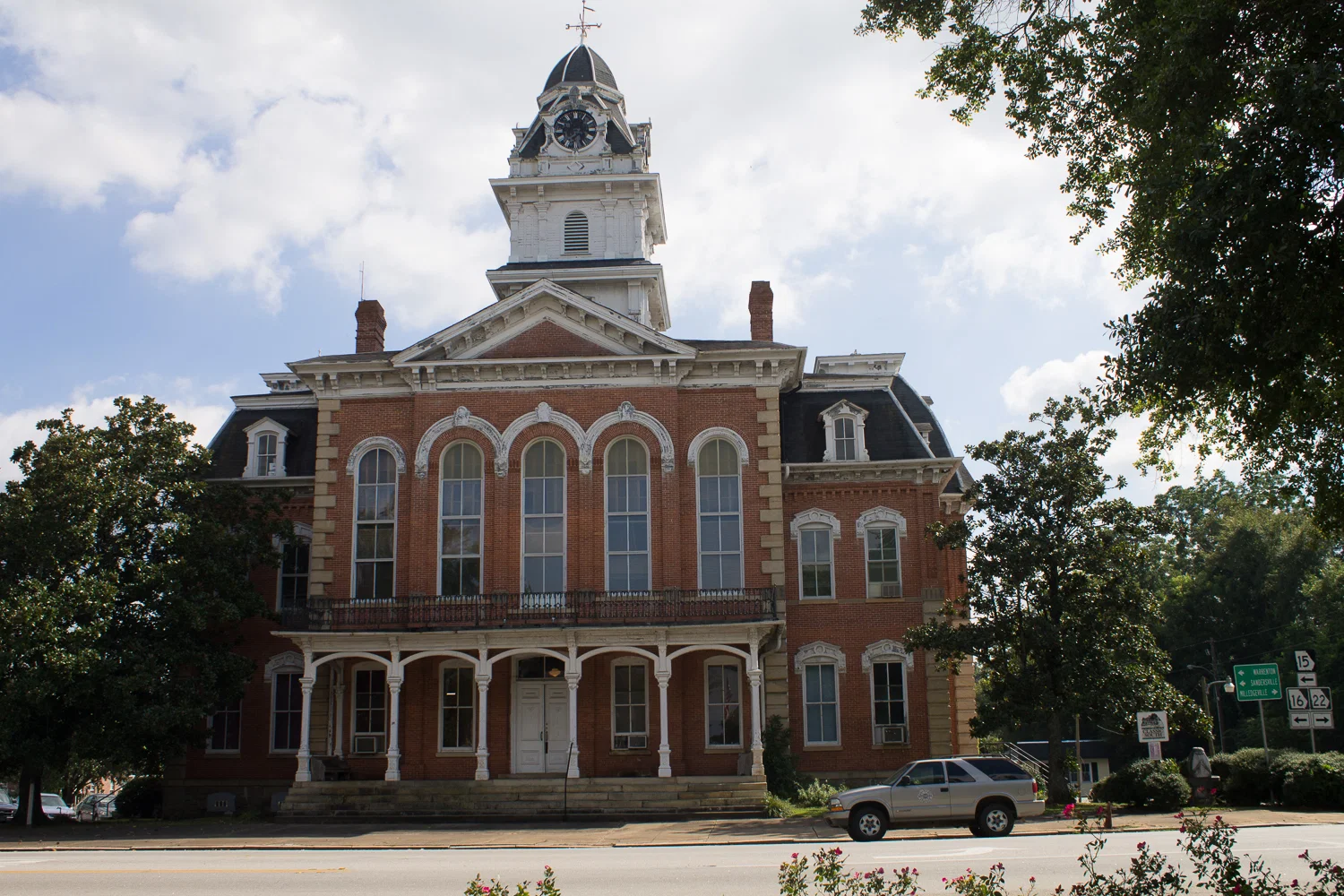
The New Georgia Encyclopedia notes that the courthouse, built between 1881 and 1883, burned for weeks, with heat reportedly intense enough to melt the 800-pound bell in the clock tower. The building was rebuilt and recommissioned in 2016 at a cost of about $7.5 million.
For genealogists, the Hancock fire also offers an important lesson. According to an update from Georgia Archives Matters, many records in the courthouse dating from the 1960s to computerization were lost, but older records had been microfilmed and were available through places such as the Georgia Archives. The Archives also held other older Hancock County records.
In other words, even a devastating courthouse fire did not erase the entire county record trail.
That is one of the most important takeaways for family historians.
When a Georgia courthouse burned, researchers often turn to substitute records. The Georgia Archives notes that many county records before 1900 are available online for free through FamilySearch or through the Georgia Archives County Records on Microfilm Collection. These may include deeds, estate records, marriage records, tax records, Superior Court records, and Probate or Ordinary Court minutes.
Tax records are especially valuable when other records are missing. From 1872 forward, Georgia counties were required to file a copy of their tax digest with the Comptroller General, now the Georgia Department of Revenue, and those records were later transferred to the Georgia Archives. The Archives describes its holdings from 1872 to 2002 as “almost complete.”
That matters because tax digests can place a person in a specific county in a specific year. They can show when a man appears, disappears, gains land, loses land, pays poll tax, owns livestock, or is listed through an estate. They rarely state family relationships directly, but they can help build timelines when census, marriage, probate, or deed records are missing.
Researchers should also check newspapers. Legal notices, sheriff’s sales, estate advertisements, divorce notices, election returns, and courthouse construction updates often appeared in local papers. The Georgia Archives specifically points researchers to Georgia Historic Newspapers as a resource for legal notices, obituaries, election results, legislative news, and regional history.
For anyone researching a Georgia family, the phrase “courthouse fire” can feel like a locked door. But often it is only a detour.
When county records are missing, look for:
Tax digests — especially useful between census years.
Deeds and land grants — sometimes copied in later books or preserved on microfilm.
Estate records — wills may be gone, but annual returns, appraisements, guardianships, or court minutes may survive.
Marriage records — sometimes reconstructed, abstracted, published, or found in church records.
Court minutes — even when case files are gone, the minutes may summarize actions taken.
Newspapers — especially legal advertisements and notices.
Church and cemetery records — often the only surviving clues in record-poor counties.
Neighboring counties — families often lived near county lines, and county boundaries changed over time.
State-level records — tax copies, land lottery records, military records, pension files, and legislative acts may contain county-level information.
Published abstracts — local historians and genealogical societies often copied records before disasters occurred.
The key is to search sideways. If the courthouse book is gone, look for the same person in a tax list, newspaper notice, land plat, church register, estate sale advertisement, or neighboring county deed.
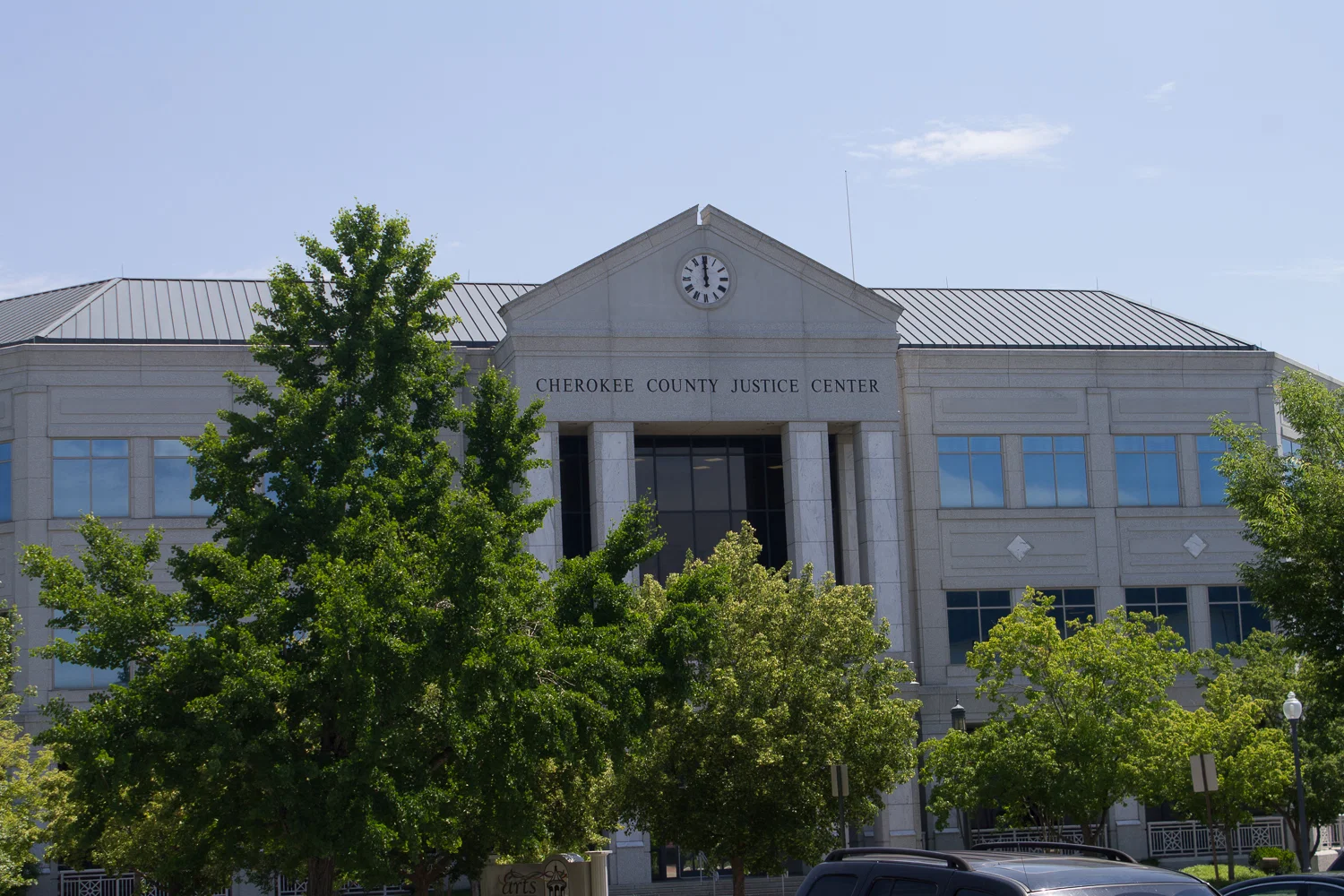
Many Georgia courthouses were rebuilt after fires. Some were reconstructed in grander style, with clock towers, domes, columns, or brick and stone exteriors meant to project permanence. Others were replaced by modern judicial centers, while older courthouses became museums, historical society headquarters, or empty landmarks on the square.
But every courthouse replacement leaves a question: what happened to the records?
Sometimes the records moved safely into the new building. Sometimes they were transferred to a county archive. Sometimes they were microfilmed by the Georgia Archives or FamilySearch. Sometimes they remained in a basement, vault, attic, or forgotten storage room. And sometimes, sadly, they vanished long before anyone realized their value.
That is why courthouse history matters. A county’s architectural history and its record history are connected. Knowing when a courthouse burned or was replaced can explain why a deed book begins late, why marriage records have a gap, why probate files are incomplete, or why a family seems to disappear from the written record.
For genealogists, courthouse losses are practical problems. For local historians, they are community turning points. For everyone else, they are reminders that history is fragile.
A courthouse fire could destroy a building. But it could also erase the names of enslaved people listed in estate inventories, widows petitioning for support, children placed under guardianship, farmers buying their first land, veterans applying for pensions, or ordinary people appearing in court for reasons large and small.
Those records were not created for us. They were created for government business. But over time, they became something more — proof that people lived, worked, married, quarreled, bought land, lost land, raised children, paid taxes, and left traces behind.
Georgia’s county courthouses tell two stories at once. One is made of brick, wood, columns, clock towers, and town squares. The other is made of paper, ink, ledgers, microfilm, and names.
When one courthouse burned, part of the story may have been lost. But very often, another part survived somewhere else — waiting for a patient researcher to find it.


Leave a Reply